“Melayu tak ada dah tanah. Melayu ada Tanah Melayu ini saja. Orang India ada India. Orang Cina ada China…” –Datuk Seri Muhammad Sanusi Md Nor, July 23, 2026 in Malaysia, a land of diversity.
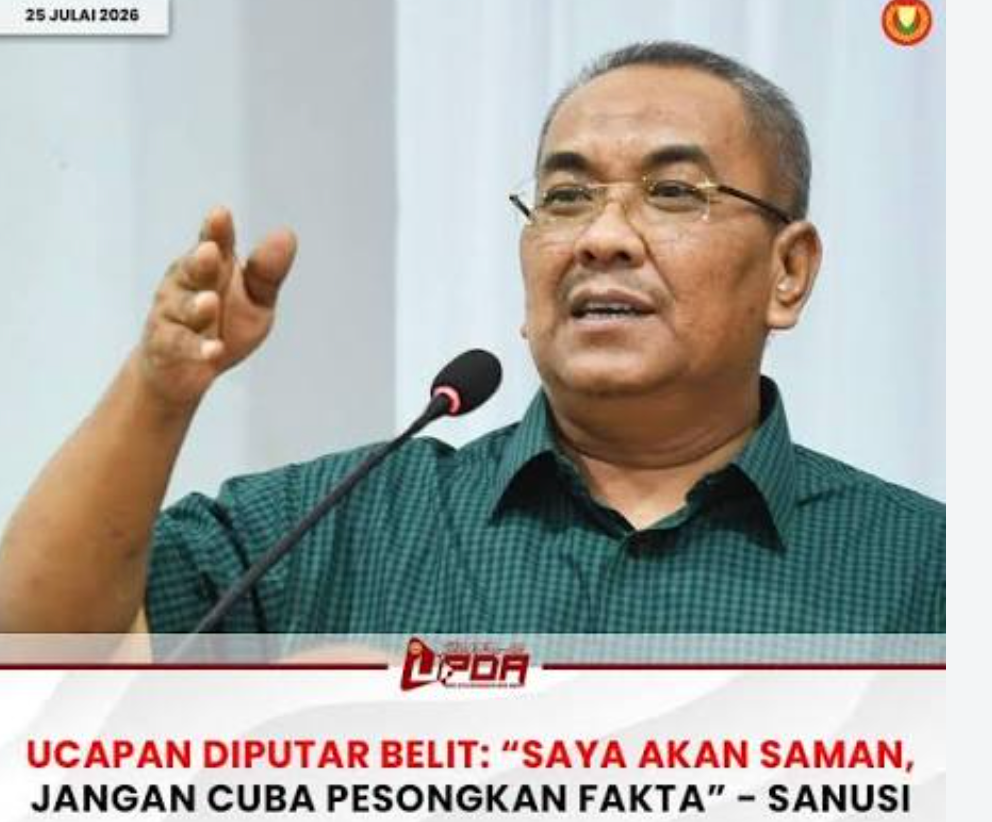
Conservatism is growing radical in Malaysia. A Kedah Menteri Besar and Perikatan Nasional election director directly suppressed the national identities by claiming that “Malays only have Tanah Melayu, while Indians have India and Chinese have China”. We all know that this was a racially discriminating statement. This article will explain why this concept fails requires looking at two core pillars of modern Malaysia: the nature of political statehood and the reality of cultural pluralism.
1. History Didn’t Start Yesterday’s Malaysia
The presence of different races in Malaysia is not a recent event, nor is it a temporary arrangement. It weaved directly into the history of the land.
Before the independent Malaysia (Malaya) even existed, the Malaya peninsula was already a thriving international trade hub. Hundreds of thousands of immigrants have flooded into Malaya peninsula during the British colonial era. We, as Malaysian Chinese and Indians, have been on this land for hundreds of years and witnessed and experienced the rise of fall of the country.
Turning back to Malay, indeed, our Malay friends capture the majority of the population. However, Malays also migrated from Sumatra and coastal Borneo. According to Datuk Seri Muhammad Sanusi Md Nor’s logic, should our Malay friends go back to Indonesia? Obviously, no because they belong here, and same as Malaysian Chinese and Indian.
Cultures Born Only on Malaysian Soil
Perhaps the strongest proof of belonging lies in the cultural heritage that exists nowhere else on Earth. If a Malaysian Chinese or Malaysian Indian travels to China or India today, they quickly discover that people view them as foreign visitors. Over hundreds of years of co-existence, the cultural traditions of Malaysia’s diverse races transformed into something distinct, localized, and irreplaceable.
The Baba Nyonya community of Melaka and Penang beautifully blended Chinese heritage with Malay language, kebaya fashion, and cooking styles. Similarly, the Chitty community of Melaka developed a rich, centuries-old identity while speaking Malay as their mother tongue. Even our national food culture—from Nasi Kandar and Roti Canai to localized Laksas—was invented right here through daily multi-ethnic interaction. Beijing did not create these traditions, and New Delhi did not invent them. They belong strictly to Malaysia, born and nurtured on local soil.
Shared Sacrifice and a Common Destiny
Beyond culture, modern Malaysia the collective sweat, labor, and sacrifice of every community constructed Malaysia. The railways, tin mines, rubber estates, ports, and early commercial centers that laid the economic foundation of modern Malaysia were the result of Malay, Chinese, and Indian workers’ hard work side by side.
When our founding leaders fought for independence in 1957, they stood together as a multi-racial coalition to secure Merdeka. The constitutional compact created a permanent, shared home for all citizens under the sovereignty of the Yang di-Pertuan Agong, establishing a nation built on mutual respect rather than conditional tenancy.
Belonging to a nation is not a gift that can be revoked by political rhetoric. You cannot tell people whose ancestors helped build the nation, whose culture exists nowhere else, and whose total loyalty lies with this country that their true home lies elsewhere. Malaysia’s diversity is not a historical accident—it is our history. Every citizen who honors the law, loves this land, and contributes to its future is rooted firmly in Malaysian soil, standing united under the exact same sky.
Explore more about our blogs https://thekitahub.com/blog/